How to Start Your Family Tree When You Know Almost Nothing
Starting your family tree can feel intimidating, especially when you do not have much information. Maybe you know a grandparent’s name, a possible hometown, and one family story that starts with, “I’m not sure if this is true, but…”
Good news: that is enough to begin.
Genealogy does not start with knowing everything. It starts with writing down what you know, asking a few questions, and following one clue at a time. No detective trench coat required, although I fully support the drama.
Start With Yourself
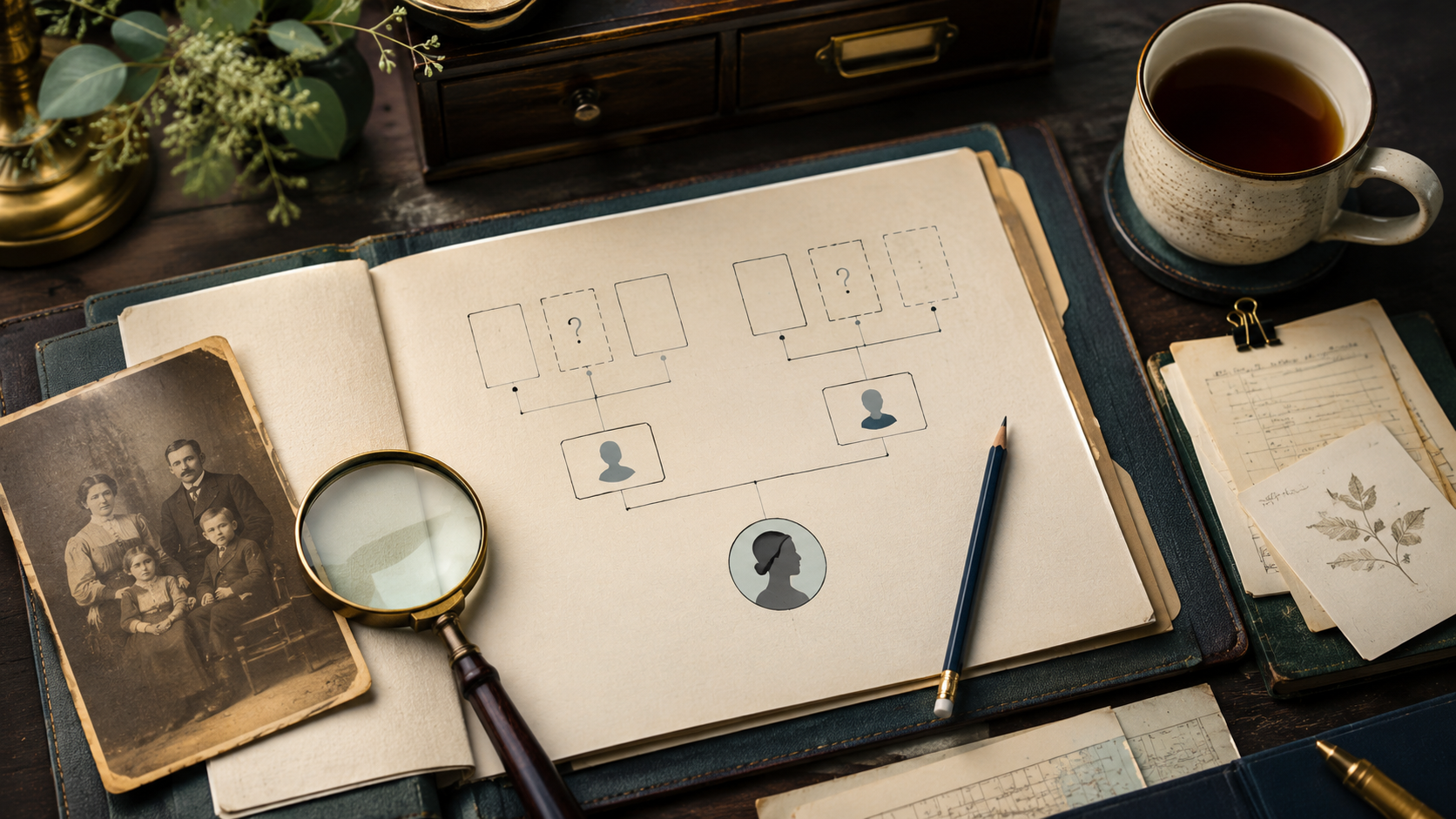
The best place to begin your family tree is with you. That may sound obvious, but many beginners try to jump straight to the 1700s before they have written down their own parents’ full names. Genealogy likes a solid foundation. It gets wobbly when we skip steps.
Start by writing down:
- Your full name
- Your birth date and birthplace
- Your parents’ full names
- Your grandparents’ names, if you know them
- Any places your family lived
Do not worry if you do not know every maiden name, exact date, or birthplace. Blank spaces are not failures. They are just clues waiting for their moment.
Write Down What You Think You Know
Before searching online, make a simple list of what you already know or have heard. Family stories, nicknames, places, old photos, and half-remembered details can all be useful.
Your notes might look like this:
- Grandma’s name was Rose, but some people called her Rosie.
- She may have been born in Pennsylvania.
- Her father might have worked on the railroad.
- There was a family story about moving to Ohio.
Are all of these proven facts? Not yet. But they are starting points. Genealogy research is often built from these little scraps of information.
Talk to Family Members
If you have relatives you can ask, start there. You do not need to conduct a formal interview with a clipboard unless that is your style. A casual conversation can give you plenty of clues.
Ask simple questions like:
- What were Grandma and Grandpa’s full names?
- Do you know where they were born?
- Did they have brothers or sisters?
- Where did the family live when you were young?
- Are there old photos, letters, certificates, or family papers?
Be patient. Sometimes people remember things out of order. One minute they cannot remember a birth year, and ten minutes later they suddenly remember an aunt, a church, and the name of the family dog. Take notes anyway. Even the dog might lead somewhere. Probably not, but genealogy is weird.
Look Around Your House First
Some of the best beginner clues are not online. They may already be sitting in a drawer, closet, photo box, Bible, envelope, or that mysterious pile of papers everyone is afraid to sort.
Look for:
- Birth, marriage, and death certificates
- Obituaries
- Funeral cards
- Old letters or postcards
- Family Bibles
- Photo albums
- Military papers
- Naturalization or immigration papers
- Old newspaper clippings
Take photos or scans of anything useful. Write down where you found it. Future-you will thank present-you for not creating a paper mystery inside the family mystery.
Choose One Family Line to Start With
When you are new to genealogy, it is tempting to research everyone at once. That way lies chaos, browser tabs, and possibly snacks eaten in self-defense.
Instead, choose one line to begin with. For example:
- Your mother’s mother’s family
- Your father’s father’s family
- The grandparent you know the most about
- The family line with the most records or photos
Focusing on one line helps you make progress faster. You can always branch out later. That is why they call it a family tree, not a family explosion.
Search for One Record at a Time
Once you have a few names, dates, and places, start looking for basic records. Do not try to solve the entire family tree in one night. Begin with one person and one record type.
Good beginner records include:
- Census records
- Birth records
- Marriage records
- Death records
- Obituaries
- Cemetery records
For example, if you know your great-grandmother lived in Ohio around 1920, try finding her in the 1920 census. That one record may give you her age, birthplace, spouse, children, and neighbors.
Keep Track of Your Sources
This part sounds boring, but it matters. Every time you find a record, write down where it came from. You do not need a complicated system. Just keep enough information so you can find it again.
Write down:
- The name of the record
- The website or archive where you found it
- The date or year of the record
- What information it gave you
This helps you avoid asking yourself later, “Where did I find that?” which is usually followed by 45 minutes of clicking and mild regret.
Do Not Worry About Being Perfect
Genealogy is a learning process. You will make mistakes. Everyone does. You may attach the wrong record, follow the wrong person, or believe a family story that later turns out to be only half true.
That is normal.
The important thing is to slow down, check records carefully, and be willing to fix things as you learn more. A family tree is not carved in stone. It is more like a working notebook with roots.
Final Thoughts
You do not need to know much to start your family tree. Begin with yourself, write down what you know, ask family members, look for records at home, and follow one clue at a time.
Genealogy is not about having all the answers right away. It is about collecting clues, checking them carefully, and slowly turning names into stories.
Start small. Stay curious. And remember: even the tiniest clue can open a door. Sometimes it opens a whole hallway. Sometimes it opens a closet full of confusing cousins. Either way, you are officially researching.