Why Your Ancestor’s Age Changes in Every Census
If you have ever followed an ancestor through census records and watched their age change like it was picking numbers out of a hat, you are not alone.
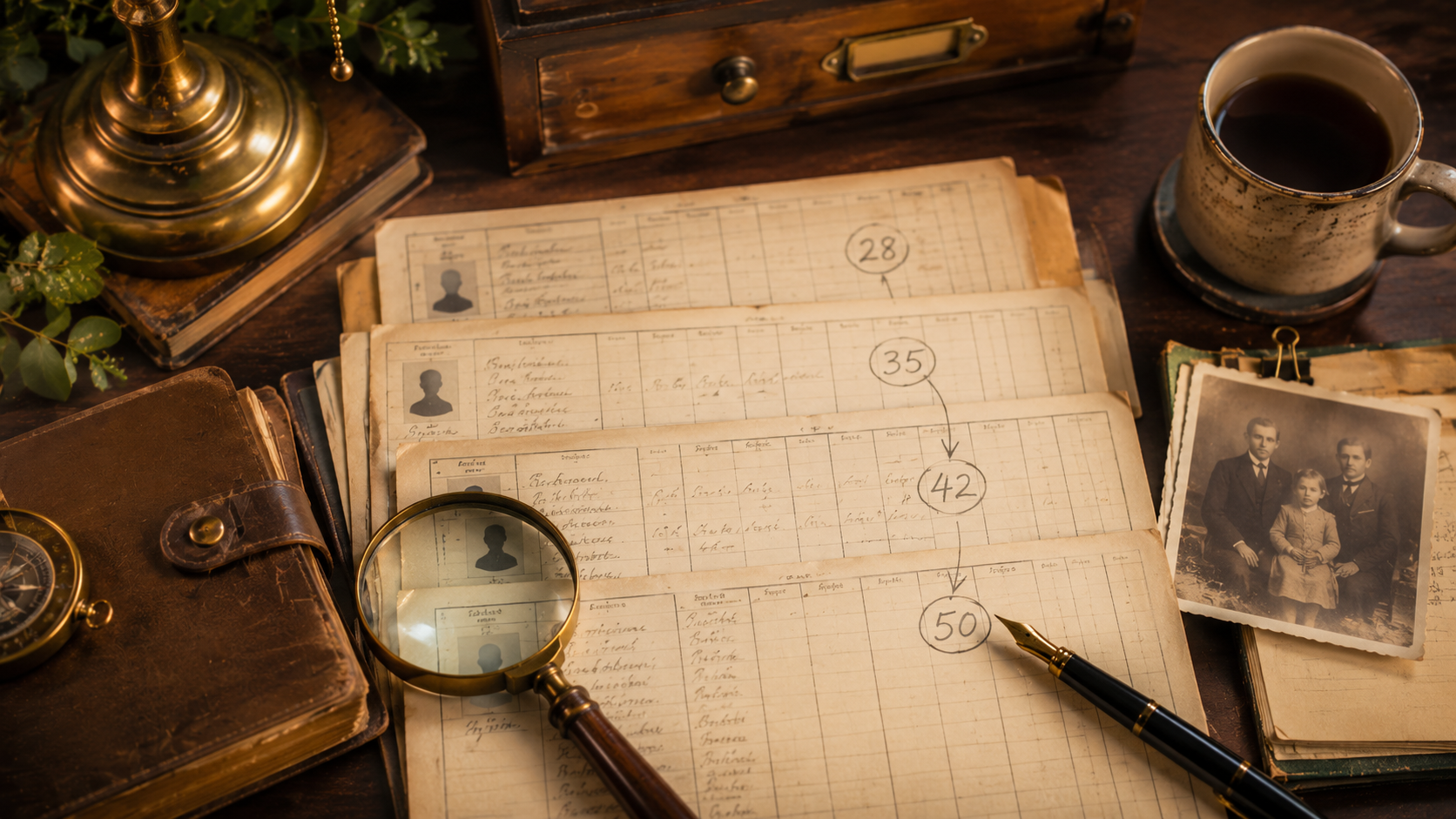
One census says your ancestor was 32. Ten years later, they are 45. Then somehow they are 51, then 63, and now you are staring at the screen wondering if math was optional in 1880.
The good news is that changing ages in census records are very common. It does not automatically mean you have the wrong person. It does mean you need to slow down, compare the details, and remember that census records were created by humans — and humans are wonderfully messy.
Census Ages Were Not Always Exact
Many people did not keep track of birthdays the way we do today. Some people knew their exact birth date, but others only had a general idea of their age.
If your ancestor was born in the early 1800s, there may not have been a birth certificate. Their age might have come from family memory, church records, a family Bible, or simply what someone believed at the time.
So when a census lists an age, think of it as a clue. Sometimes it is accurate. Sometimes it is close. Sometimes it is standing across the room waving vaguely in the direction of the truth.
The Informant May Not Have Known
The person giving information to the census taker was not always the person being listed. A spouse, adult child, neighbor, landlord, or another household member may have answered the questions.
That person may not have known everyone’s exact age.
Imagine someone coming to your door and asking the age of every person in the household, including boarders, in-laws, stepchildren, and maybe a cousin who has been staying “just for a little while” since 1897. Mistakes were going to happen.
This is especially important for large households. The more people listed, the more chances there were for someone’s age to be guessed, rounded, or remembered incorrectly.
Census Takers Could Make Mistakes
Census takers had a big job. They went house to house, asked questions, wrote down answers, and sometimes copied information into another version of the record later.
Mistakes could happen at any step.
A census taker might:
- Mishear an answer
- Write a number unclearly
- Copy information into the wrong line
- Assume an age based on appearance
- Record the wrong household member’s details
Old handwriting does not help. Sometimes a 3 looks like an 8, a 7 looks like a 1, and the whole page looks like it was written during a wagon ride.
People Sometimes Rounded Their Ages
Some ancestors rounded their ages. Instead of saying they were 47, they might say 45 or 50. This can make a birth year shift from census to census.
This happens a lot with adults. Children’s ages are often more precise, especially younger children, but even those can be off.
If your ancestor’s reported age creates birth years like 1848, 1850, and 1852 across several records, do not assume one is automatically correct. Look for the pattern.
A range may be more useful than one exact year.
Instead of saying “born in 1850,” you might note “born about 1848–1852” until stronger evidence appears.
Some People Changed Their Age on Purpose
Sometimes an age difference was not an accident. People may have reported a different age for personal, social, legal, or practical reasons.
Someone might change their age because of:
- Marriage
- Military service
- Employment
- Immigration
- Social expectations
- Embarrassment about an age gap
This does not mean your ancestor was being dramatic. Although, to be fair, some of them absolutely were.
A person might shave off a few years, add a few years, or let someone else guess and never bother correcting it.
Birthdays and Census Dates Matter
Census records were taken as of a specific date. If your ancestor had not had their birthday yet that year, their age may look one year younger than expected.
For example, if your ancestor was born in November 1860 and the census was recorded as of June 1880, they would still be 19, not 20.
That one-year difference is normal. It does not mean the record is wrong. It just means birthdays are sneaky little calendar gremlins.
When comparing census ages, pay attention to the census year and the official census date when possible.
Birthplaces Can Help Confirm the Right Person
When ages change, look at the whole household, not just the number.
Ask yourself:
- Is the spouse’s name correct?
- Are the children’s names familiar?
- Is the location reasonable?
- Do nearby relatives appear close by?
- Does the occupation make sense?
- Are the birthplaces similar across records?
If the age is slightly off but the spouse, children, location, and occupation all fit, you may still have the right person.
If the age is off, the spouse is wrong, the children do not match, and the person has moved three states away with no explanation, then you may be looking at someone else.
Make a Timeline
A timeline is one of the easiest ways to deal with changing ages. Write down each record you find and the age listed in that record.
Your timeline might look like this:
- 1870 census: age 12, estimated birth year 1858
- 1880 census: age 21, estimated birth year 1859
- 1900 census: born May 1857
- 1910 census: age 52, estimated birth year 1858
- Death record: born 1857
Looking at the records together, you can see that the ancestor was probably born around 1857–1859. That is much more helpful than arguing with one census record like it personally insulted you.
Look for Stronger Records
Census records are useful, but they are not always the best source for an exact birth date.
To confirm an ancestor’s age or birth year, look for:
- Birth records
- Baptism or church records
- Family Bible entries
- Marriage records
- Military records
- Death certificates
- Obituaries
- Gravestones
Keep in mind that even these records can contain mistakes, especially if the information was given by someone else. The more records you compare, the clearer the pattern becomes.
Do Not Force One Record to Be Perfect
Beginners often want one record to give the final answer. That would be nice. It would also be very unlike genealogy.
Instead of forcing one census record to be perfect, compare several records. Look for agreement across time.
If most records point to a birth year around 1845, and one census says 1838, the odd record may simply be wrong. Or it may belong to a different person. Either way, it deserves a note.
A good note might say:
The 1880 census gives an estimated birth year of 1838, but other records suggest a birth year closer to 1845. More research is needed to determine whether this is the same person.
Notes like this save you from future confusion. Future-you has enough to deal with, especially if your ancestor named three sons John.
Final Thoughts
If your ancestor’s age changes from census to census, do not assume your research is wrong. Census ages are often estimates, guesses, mistakes, or rounded numbers.
Compare the whole household, build a timeline, and look for stronger records when you can. A changing age is not the end of the trail. It is just another clue.
Genealogy is rarely neat. But if you follow the clues carefully, even a wobbly census age can help you move closer to the truth.